


In the past year, the global price of IT hardware has skyrocketed: memory chips and solid‑state drives (SSDs) have risen 300 %–400 %, while server costs are up by 50 % and consumer PCs by 10 %–50 %. The root cause is an unprecedented demand for high‑performance memory from large artificial‑intelligence (AI) data centres, which now consume nearly 70 % of the world’s RAM output. As manufacturers pivot to produce AI‑centric components, standard business and consumer devices are left with a dearth of parts and escalating costs.
AI Adoption and Increasing Memory Demand
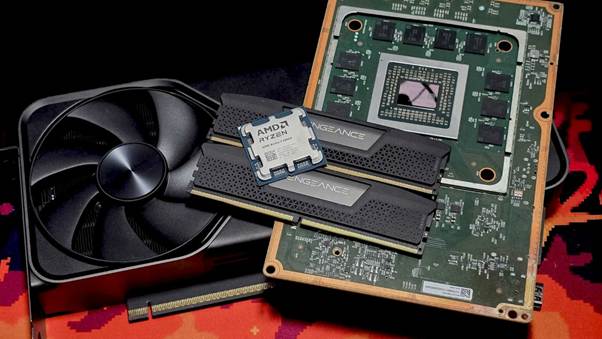
The rapid adoption of artificial intelligence has fundamentally altered demand patterns within the global server and semiconductor markets. AI workloads now represent a dominant proportion of server demand, with large enterprises deploying increasingly data-intensive infrastructure and purchasing substantial quantities of memory and storage capacity.
The resulting demand has placed significant pressure on global memory production. It is estimated that approximately 70% of global memory production is now being directed towards AI-related server infrastructure. This concentration of production capacity represents a substantial shift from traditional enterprise and consumer computing requirements.
AI training workloads require extremely high memory bandwidth and low latency in order to process the large datasets and computational workloads associated with modern AI models. High Bandwidth Memory (HBM3), together with high-performance DDR5 memory, can provide aggregate bandwidth of up to approximately 8 TB/s in suitable configurations, significantly exceeding the requirements of many conventional enterprise workloads.
Demand is also becoming increasingly concentrated among the largest technology companies. Major cloud and technology organisations, including Google, Amazon, and Meta, are reported to collectively account for more than 70% of annual RAM shipments. This concentration of purchasing power gives the largest technology companies considerable influence over semiconductor supply and contributes to a market environment in which suppliers prioritise the highest-volume and highest-margin customers.
Production Re-allocation and Component Shortages
The rapid expansion of AI infrastructure has encouraged semiconductor manufacturers to reallocate manufacturing capacity towards components designed for AI applications. HBM3 and other high-performance memory technologies generally command higher margins than conventional consumer-oriented DDR4 and DDR5 products. As a result, manufacturers have incentives to reconfigure fabrication facilities and production lines to increase output of higher-value components.
This reallocation of manufacturing capacity can reduce the availability of conventional memory modules for PCs, laptops, workstations, and other OEM products. In addition to fabrication capacity, manufacturers may also need to reallocate specialist equipment, engineering resources, and skilled personnel towards AI-focused production.
The combination of increased demand and reduced conventional production capacity has contributed to shortages in standard memory and storage components. This is particularly significant for organisations that depend on established DDR4 and DDR5 platforms and have limited flexibility to substitute alternative technologies.
Supply Chain Disruptions
The effects of constrained production are being amplified by changes in inventory management across the technology supply chain. OEMs and distributors are maintaining comparatively low inventory levels, in some cases holding only a few weeks of critical components. While lower inventory levels can reduce storage and working-capital costs under normal market conditions, they increase exposure to supply disruptions when demand rises rapidly.
Component pricing has also become increasingly volatile. Supplier quotations may remain valid for less than 72 hours, and in some cases as little as 48 hours. This significantly reduces the time available for procurement teams to evaluate quotations, obtain internal approvals, and negotiate purchasing agreements.
As a consequence, businesses face longer lead times, greater uncertainty over future component prices, and reduced negotiating leverage. Organisations that previously relied on routine procurement cycles may therefore need to adopt shorter purchasing cycles and more proactive inventory-management strategies.
Cost Escalation
The imbalance between supply and demand has resulted in substantial increases in the cost of memory and storage components. Between 2025 and 2026, DDR4 and DDR5 RAM prices are estimated to have increased by approximately 300%, while NVMe-M solid-state drive prices have increased by approximately 400%.
The increase in component costs has also affected server manufacturing. Server bill-of-materials (BOM) costs are estimated to have increased by approximately 50%, as manufacturers pass higher memory and storage costs through the supply chain.
Consumer hardware has been similarly affected. Retail prices for consumer laptops and desktop computers are estimated to have increased by between 10% and 50%, depending on the specification, manufacturer, and extent of component exposure.
Cost Pass-through and OEM Mark-ups
The increase in component costs does not necessarily represent the final price increase experienced by customers. OEMs and system manufacturers typically apply their own margins and operating costs to the underlying bill of materials. Where component costs have already increased substantially, the resulting retail price can therefore increase by a greater absolute amount.
OEMs are estimated to add approximately 25%–35% to the already inflated BOM costs. On a baseline laptop, this level of additional mark-up could translate into a further consumer price increase of approximately £30–£37.
The overall effect is a cascading increase in costs throughout the technology supply chain. Higher semiconductor production costs contribute to increased component prices, which raise OEM manufacturing costs and ultimately result in higher prices for businesses and consumers.
The combination of AI-driven demand, production re-allocation, constrained inventories, supply-chain disruption, and cost pass-through therefore represents a significant structural change in the memory and storage market. Unless additional manufacturing capacity becomes available or demand growth moderates, these pressures are likely to remain an important factor affecting the pricing and availability of computing hardware.
Market Consequences

Consumer Electronics
The continuing constraints in the supply and availability of memory and storage components have had a material impact on the consumer electronics market. Global desktop PC shipments declined by approximately 22% year-on-year, while laptop shipments fell by approximately 15%. These declines reflect, in part, the increased cost of replacement hardware and the resulting reluctance among consumers to upgrade existing devices.
This has contributed to a longer device replacement cycle, commonly referred to as the “buy-longer” phenomenon. According to reporting by the BBC, approximately 40% of consumers are choosing to retain their existing devices for longer as a result of higher replacement costs. If sustained, this trend could reduce demand for new consumer hardware and further extend average PC and laptop lifecycles.
Business and Enterprise
Businesses and enterprise customers have experienced similar supply-chain pressures, particularly in relation to network infrastructure and server hardware. Average lead times for essential equipment, including network infrastructure, firewalls, and servers, have increased from approximately four weeks to twelve weeks. This represents a substantial extension in procurement timescales and creates additional challenges for organisations undertaking infrastructure upgrades, capacity expansion, or hardware replacement programmes.
The impact has been particularly pronounced among smaller and specialist hardware manufacturers. Some custom computer builders, including boutique gaming system manufacturers, have reportedly suspended production because of the increased cost and limited availability of key components. In some cases, niche hardware manufacturers have ceased operations where rising bill-of-materials costs have made continued production commercially unsustainable.
Economic Impact
The effects of increased component costs extend beyond individual manufacturers and consumers to the wider technology sector and economy. The PC market is estimated to have incurred approximately $18 billion in lost revenue during the second quarter of 2026. Reduced shipments, delayed purchases, and higher component costs have collectively contributed to this decline.
At the consumer level, increases in the cost of PCs, laptops, storage, and other IT equipment have created additional inflationary pressure. Consumer IT expenditure is estimated to contribute approximately 1.5% to the overall inflation rate, although the precise contribution will depend on the methodology used to measure technology-related price changes and their weighting within broader inflation measures.
Industry Responses
The semiconductor and technology industries have adopted a range of measures in response to constrained component availability and increased demand from AI infrastructure. Semiconductor manufacturers have sought to increase fabrication capacity for conventional DDR4 and DDR5 memory while also introducing lower-cost 3D NAND-based SSD products. These measures have provided some additional supply; however, their effectiveness remains limited while overall manufacturing capacity continues to face constraints.
Original equipment manufacturers (OEMs) have pursued alternative product and procurement strategies. Some manufacturers are increasing their use of ARM-based laptop platforms incorporating integrated memory, while others are negotiating larger-volume purchasing agreements with semiconductor and component suppliers. These approaches can provide manufacturers with greater supply certainty and potentially improve production margins, although the increased use of integrated components may reduce consumer choice and upgradeability.
Governments have also introduced measures intended to strengthen domestic semiconductor manufacturing capabilities and protect strategically important technologies. These include financial incentives and subsidies for domestic semiconductor fabrication facilities, together with export controls relating to advanced AI chip technologies. While such measures may strengthen semiconductor supply resilience over the longer term, they are unlikely to provide an immediate solution to current component shortages.
Research and development into alternative memory technologies is continuing. Emerging non-volatile memory (NVM) technologies and memristor-based architectures have the potential to provide higher memory densities and lower power consumption than some conventional technologies. However, commercial adoption remains limited. Factors including manufacturing cost, reliability, technology maturity, and compatibility with established hardware and software ecosystems remain significant barriers to widespread deployment.
Mitigation Strategies for Businesses
Businesses can adopt a number of measures to reduce their exposure to component shortages, supply-chain disruption, and price volatility.
Supply-chain diversification should be considered a priority. Organisations can reduce dependency on individual suppliers or geographical regions by establishing relationships with multiple manufacturers and distributors. Alternative and less-established suppliers may also provide additional capacity during periods of constrained availability, although appropriate due diligence and quality controls remain essential.
Early price commitment can provide greater protection against short-term price volatility. Where commercially viable, organisations can use forward purchasing agreements, fixed-price contracts, and price-matching arrangements to establish component costs in advance. Such measures can improve budget predictability, particularly in markets where supplier quotations are valid for only a limited period.
Modular system design can further reduce long-term hardware costs. Equipment designed to permit the replacement or upgrading of memory and storage components without requiring a complete system redesign provides greater flexibility when component availability changes. Modular architectures can also extend equipment lifecycles and reduce the frequency with which complete systems need to be replaced.
Cloud and edge computing provide additional opportunities to reduce dependence on on-premises infrastructure. Where workloads are suitable for migration, organisations can utilise cloud infrastructure and managed services, allowing providers to absorb some of the capital expenditure associated with high-performance AI and server hardware. This can reduce the immediate requirement for organisations to purchase additional physical infrastructure.
Lifecycle management and procurement software can also play an important role. By monitoring hardware inventories, component availability, supplier lead times, and consumption rates, organisations can identify potential shortages before they become critical. Automated procurement and replenishment processes can then be used to initiate orders at predetermined inventory thresholds, reducing the likelihood of operational disruption.
Future Outlook
The outlook for the memory, storage, and PC markets between 2027 and 2030 will depend on several interconnected factors. These include the rate at which semiconductor manufacturing capacity is expanded, the continuing development of AI infrastructure, changes in consumer and enterprise demand, and developments in international trade and semiconductor policy.
Potential Market Scenarios
The outlook for the memory, storage, and PC markets through to 2030 is dependent on the balance between semiconductor manufacturing capacity, AI infrastructure demand, and wider developments within the global technology supply chain. Three potential scenarios can be considered: a favorable scenario in which additional manufacturing capacity comes online and AI demand begins to moderate; a baseline scenario in which demand continues to grow while capacity expansion remains gradual; and a more adverse scenario in which geopolitical and supply-chain pressures intensify.
Under the potential scenario, semiconductor manufacturers successfully bring significant additional fabrication capacity online while the rate of growth in AI infrastructure demand begins to moderate. The combination of increased supply and slower demand growth would reduce pressure on global memory and storage markets. Under these conditions, memory prices could decline to approximately 120% above previous levels by the middle of 2028, while global PC shipments could recover by approximately 15%. This would represent a gradual normalization of supply conditions and could improve hardware affordability for both consumers and businesses.
Under the baseline scenario, demand for AI infrastructure continues to increase at a steady rate while semiconductor manufacturers undertake a more gradual expansion of production capacity. This would maintain pressure on the availability of conventional memory and storage products and limit the extent to which prices can return towards previous levels. Consequently, memory prices could remain more than 300% above previous levels, with consumer and business hardware continuing to experience elevated costs. Under this scenario, the effects of current supply constraints could remain evident across the PC and wider IT hardware markets through to 2030.
Under the pessimistic scenario, increasing trade tensions, additional export restrictions, or further disruption to global semiconductor supply chains could exacerbate existing shortages. A sustained imbalance between supply and demand could result in memory costs increasing significantly further, potentially doubling from already elevated levels. Such conditions could accelerate changes in PC system architecture as manufacturers seek to reduce hardware costs and minimize their dependence on constrained components. This could result in greater adoption of ARM-based computing platforms and lower-cost microcontroller-based systems in selected applications.
The eventual market outcome is therefore likely to depend on the interaction between AI demand growth, semiconductor capacity expansion, geopolitical conditions, and the development of alternative computing and memory technologies. The ability of manufacturers to expand conventional memory production while meeting the continuing requirements of AI infrastructure will remain a key factor in determining component availability and hardware pricing through to 2030.
Conclusion
The analysis demonstrates that the rapid expansion of AI infrastructure is having a significant and far-reaching impact on the global memory, storage, and wider IT hardware markets. The concentration of semiconductor manufacturing capacity and purchasing power around AI-related workloads has created substantial pressure on the availability of conventional memory and storage components. This has contributed to significant increases in component prices, extended lead times, and higher costs for both enterprise and consumer hardware.
The effects extend beyond component pricing. Reduced availability of DDR4 and DDR5 memory, increased NVMe-M SSD costs, and higher server bills of materials are creating additional financial and operational pressures throughout the technology supply chain. Businesses are having to contend with shorter supplier quotation periods, reduced inventory levels, longer procurement cycles, and greater uncertainty over future hardware costs. At the consumer level, higher prices are contributing to longer replacement cycles and reduced demand for new PCs and laptops.
The industry is responding through increased semiconductor capacity, alternative product architectures, bulk procurement agreements, government investment, and research into emerging memory technologies. However, these measures are unlikely to eliminate the underlying pressures immediately. In the short term, organisations therefore need to focus on supply-chain diversification, forward purchasing, modular hardware design, effective lifecycle management, and the selective use of cloud and edge computing to reduce their exposure to supply and pricing volatility.
Looking towards 2030, the eventual market position will depend largely on whether semiconductor production capacity can expand sufficiently to meet continued AI-driven demand. A successful expansion of manufacturing capacity combined with moderating AI demand could gradually improve availability and affordability. Conversely, continued rapid AI growth, geopolitical disruption, or further constraints on semiconductor production could prolong elevated prices and accelerate the adoption of alternative computing architectures.
Overall, the current situation represents more than a temporary increase in hardware prices. It highlights a broader structural shift in the semiconductor industry, in which AI infrastructure has become a major driver of investment, manufacturing capacity, and component demand. For businesses, the implications extend beyond procurement costs and require greater emphasis on resilience, forward planning, supplier diversification, and technology flexibility. The ability of the semiconductor industry to balance the rapidly growing requirements of AI with the continuing needs of the conventional PC, enterprise, and consumer markets will be a defining factor in the availability, affordability, and development of IT hardware over the remainder of the decade.
No responses yet